Build it
The Tessera case is the first thing you can make. It is a first design that nobody has printed yet, so treat it as a starting point and expect two or three rounds of printing and adjusting.
Tessera case, version 0.4
For one 18650 cell: 46 x 139 x 24.8 mm, plus 6 mm for the mount. A variant for a 21700 cell is included.
- Two sealed chambers, one for the cell and one for the electronics, each with its own gasket
- Battery hatch with four thumb screws, no tools needed
- Check-in button and a guarded SOS button on a soft keypad
- Seats for the radio board, vibration motor and satellite antenna
- A frame on the back for PALS webbing
The package holds STEP and STL files for every part, the parametric source, a README and renderings. There is also a two-page product sheet.
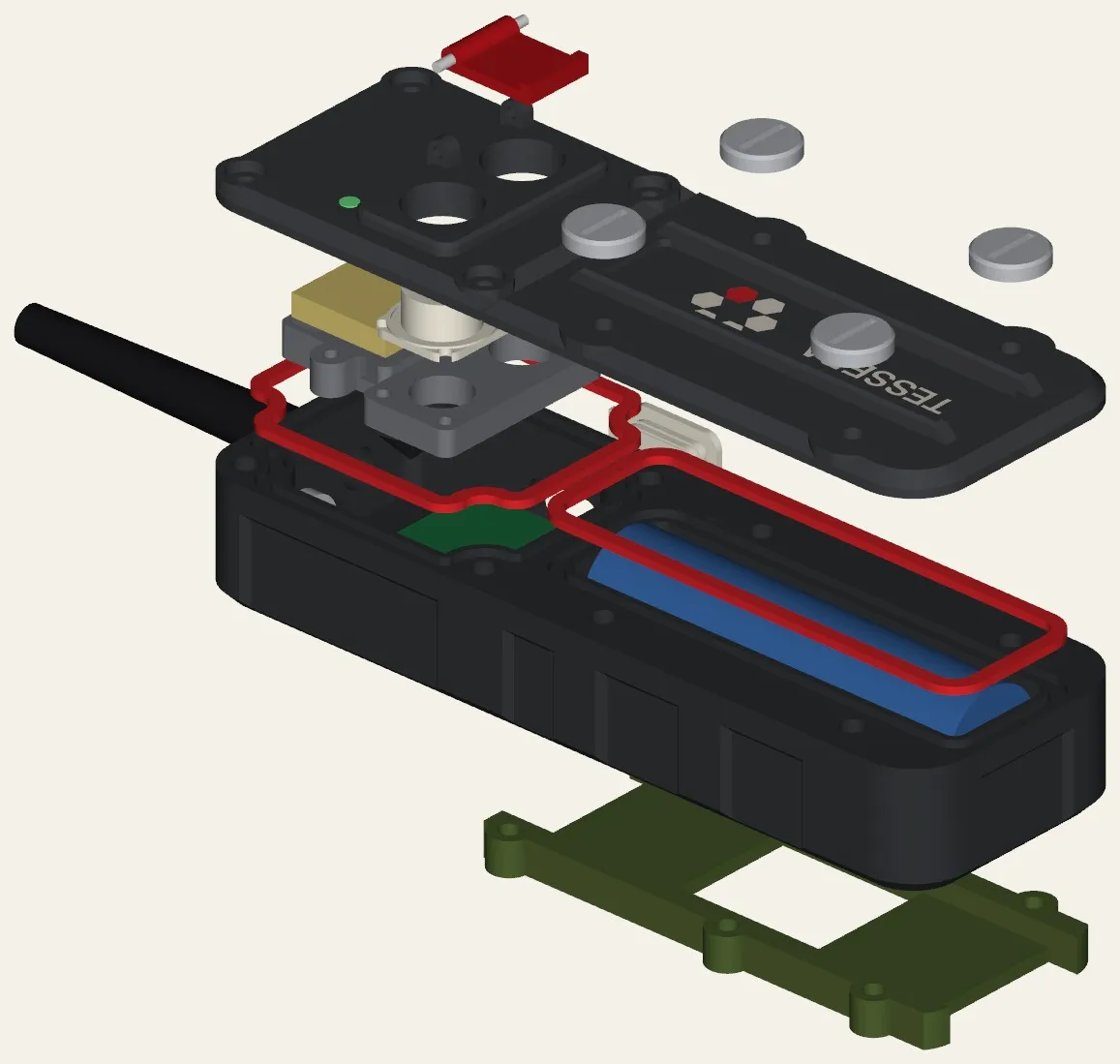
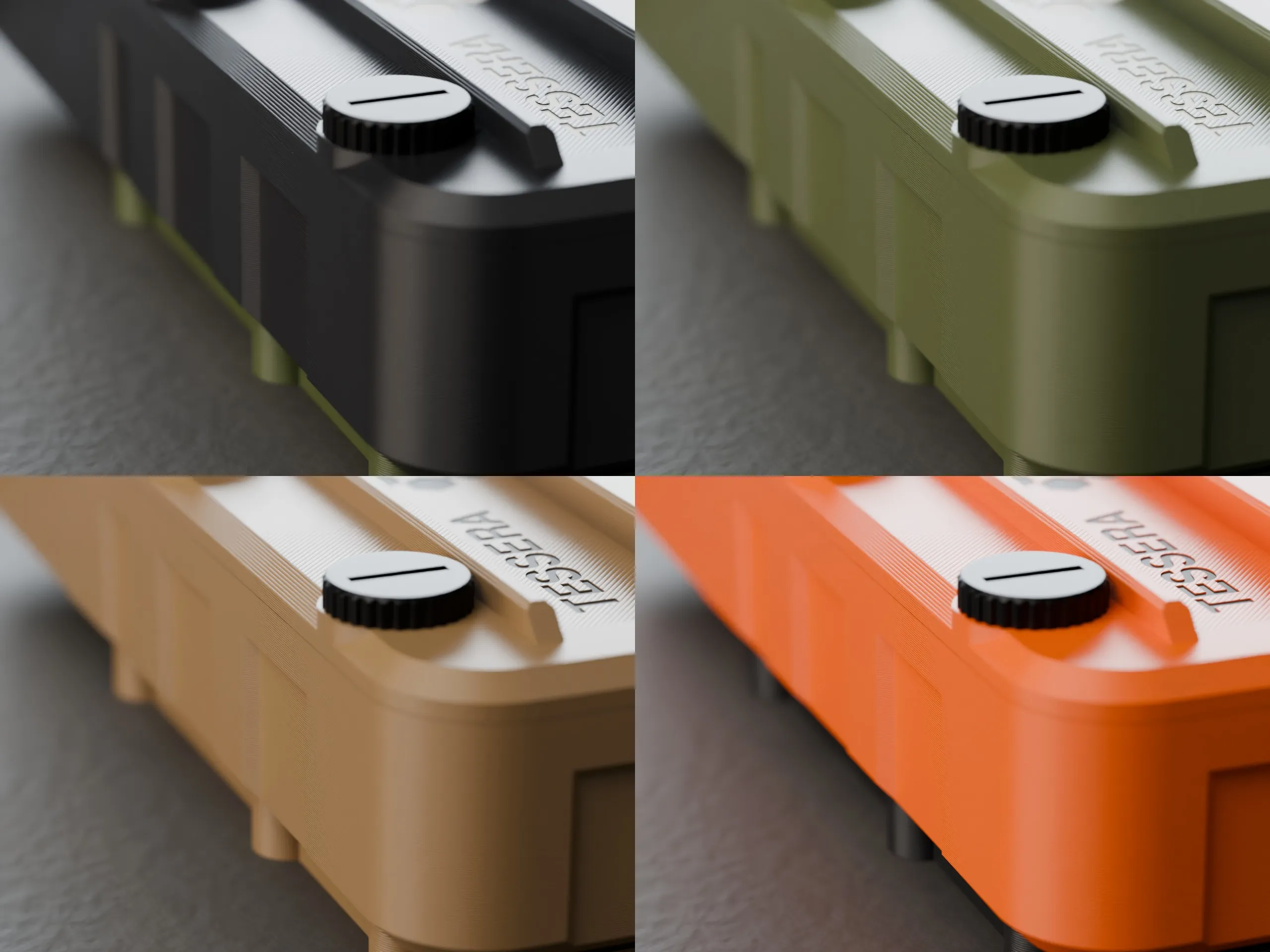
What you need
| Printer | Any FDM printer with a 0.4 mm nozzle. No supports needed. |
|---|---|
| Material | PETG or ASA for the case, TPU for the keypad and the USB plug |
| Settings | 0.2 mm layers, 3 perimeters, 12 percent infill |
| Printed weight | About 76 g in PETG (estimate) |
| Bought parts | Radio core and base board, satellite receiver and antenna, cell, gasket cord, 14 thread inserts, screws |
| Materials | About 90 EUR for one unit (estimate, partly from list prices) |
Read this before you trust it
- Untested. The case exists as a design. Nobody has printed, assembled or dunked one.
- Waterproofing is a target. The design aims for IP67. Test yours empty, with tissue inside, under a metre of water for half an hour.
- The board positions are assumptions. Measure your radio board and adjust the model before printing the body.
- There is no firmware of ours yet. The hardware runs standard MeshCore firmware.
Licence. Not decided yet. Until it is, the files are offered for personal use. A proper open licence will follow.